



01 Oct The Resilience Interviews: Michelle Minnikin
The Resilience Interviews: Michelle Minnikin
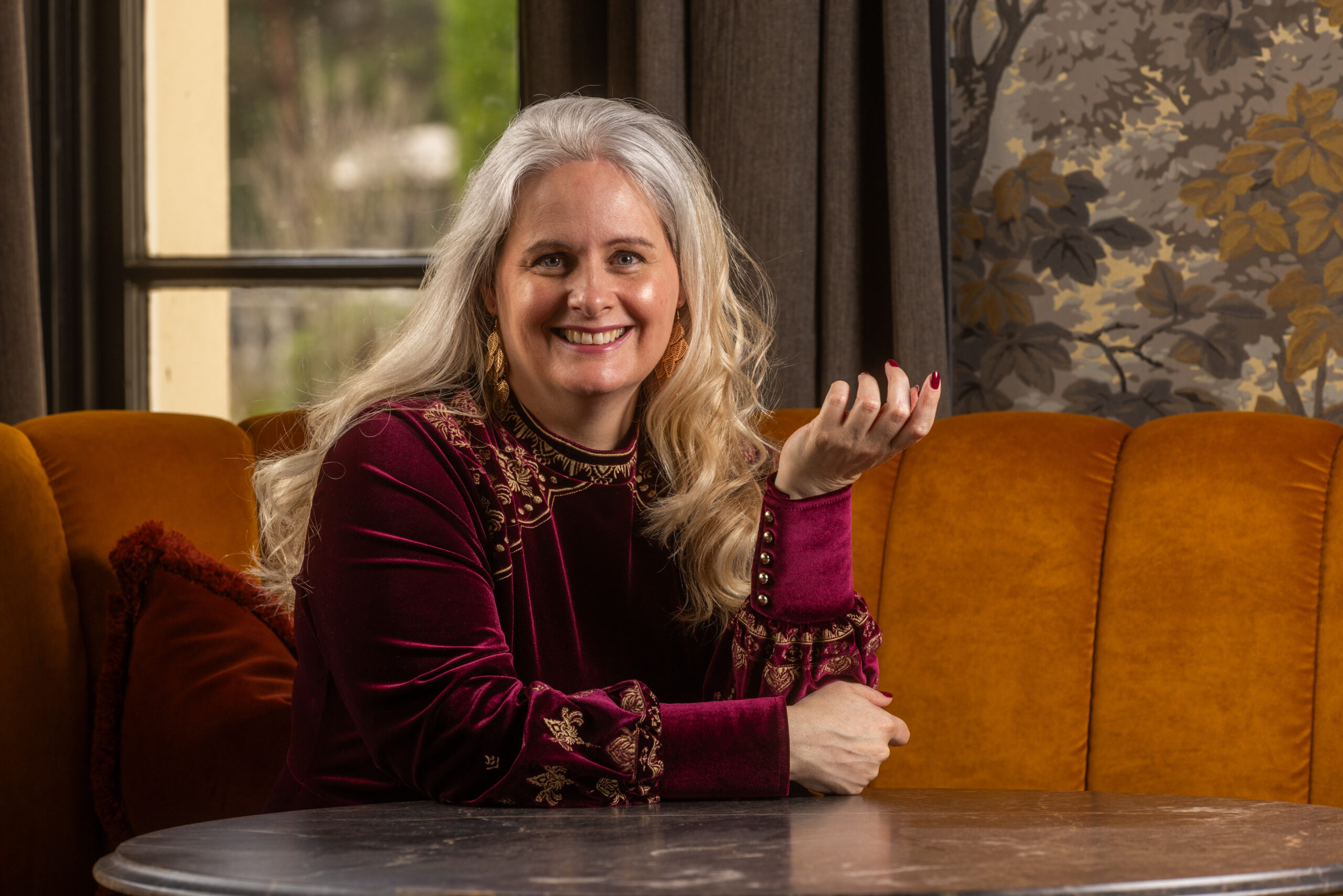
I’ve known Michelle Minnikin ever since we were on the same cohort (the very first) of an accelerator programme for psychologists and it’s been wonderful to see her embrace visibility and embrace the role of author and founder of Good Girl Deprogramming. Here’s what she had to say about resilience, visbility and being a good girl (or not).
What do you want people to feel when they see your website or a post about Good Girl Deprogramming, and how do you create that feeling?
I want people to feel seen. To recognise that the problem was never them. To feel like they belong, and to see that the way we’ve all been collectively living is doing damage to our health, our vitality, our lives.
Society wants to keep women and girls “behaving” – being nice, kind, care, share, self-sacrificing, pretty, endlessly accommodating… my research led me to figuring out how they do this, through various tools of coercive control. When I found this out, I wanted to share this with all the women. Because they have us acting against our own best interests – restricting our freedom, autonomy and radiance. Patriarchy literally sucks the life out of us. Knowing this is scary and confronting, I very much realise.
So, most of all, I want to give them hope. There is a different way. A more whole way. This isn’t about becoming somebody new, it’s about shedding all the layers of conditioning so you can remember who the hell you were before any of it landed.
I do that by sharing stories. Mine, mostly. I’m not 100% deprogrammed from all the ways society keeps women behaving, so I share the moments where I’ve absolutely failed and the moments where I’ve totally won. Both are useful.
How comfortable are you yourself with being visible?
I thought I was comfortable. Then I got to the edge of my comfort zone and realised I wasn’t, not really. Visibility was landing in my body as A LOT. We see daily online witch-hunts. People feel entitled to comment negatively on women’s posts. I used to think a member of the public would complain about me for swearing on the internet to my professional body and I’d be kicked out. There was a real fear there.
So, I did some serious work on making it feel safe. Therapy, coaching, and working on the witch wound, so that my nervous system actually believes I’m safe being seen, not just my head. Funnily enough the thing that helped the most was to create a whole workshop about visibility, get a bunch of women together to run it and seeing how much good it did. Knowing it’s not just me was massive.
I can deal with people who don’t like me on the internet now (mostly men). I stick to LinkedIn, where people have to be at least a bit professional. And I have backup: my friend and collaborator Felice Ayling. When things get too much, I send her in and she winds them up and then annihilates them. Honestly, it’s quite fun now when a troll lands in my comments.
Has it always been this way, and if not, what has your journey been?
No. It’s been work, and it’s still work.
Society wants women to stay quiet, keep our heads down and our mouths shut. So me being visible is an active bit of deprogramming, and a bit of a middle finger to the systems of control we’re all living inside.
There’s a Marianne Williamson quote about how shining your own light gives other people permission to shine theirs. That’s what I’m doing. That’s the whole point. Also – I shy away from being super polished – because that’s not real, I show up as my slightly messy, forget words halfway through a sentence, funny self. And that is ok. Did you know that society didn’t want women to even be seen laughing – they told us we could die or go insane if we let the laughter out. My word.
I think I am naturally funny – I got into improv comedy during the pandemic to stay sane. So, it’s no real surprise when it came to choosing a professional speaking coach, I chose one who was a stand-up comedienne!
What visibility activities do you embrace, and what feels challenging or tedious? Have you dropped something because it just doesn’t suit you, or because it was a waste of time?
LinkedIn and podcasts. That’s it.
LinkedIn is my favourite because everybody stays fairly normal. We’ve had moments, but it’s always someone with an account and two followers. I’m just over 25,000 followers there and it does well. Podcasts I love because talking is my favourite thing. I’ve been on a couple run by men recently, which has been really interesting. They get it.
TikTok, Instagram, Facebook, Twitter: dropped. Take anything over to TikTok and you get “you need to deprogramme yourself to the gym” from some hilarious anonymous person. It’s not that I’m scared of those places. It’s that my energy can’t be bothered. It’s draining, boring and unpredictable, and life’s too short. The women I want to help are on LinkedIn.
What advice do you have for someone who wants to be more visible, especially if they are still firmly in Good Girl programming?
There’s a weird idea floating around that to be visible you have to be totally vulnerable and share your whole story, warts and all. You don’t.
It’s your story. It’s your public persona. You get to craft it however you want. It doesn’t have to be a sob story or a rags-to-riches arc. Glimpses are fine. You can curate the best bits and the worst bits and leave the rest.
You don’t have to stand naked in front of the internet. What’s that for, anyway? It’s pointless and draining. You are in control. AND – you don’t owe anyone bits of you that you’re not comfortable sharing.
Are you a planner and scheduler, or more spontaneous?
About 80% spontaneous, 20% planned, and the 20% is only when there’s a campaign on and I need to be talking about what’s launching next.
The rest of the time it’s document, don’t create. Something happened, talk about it. Saw something that’s wrong, talk about it. What do I feel like posting today?
My book-writing coach talked about planners and pantsers, people who plan versus people who fly by the seat of their pants. I am absolutely a pantser. And that’s ok. I do sometimes wish I could be more organised – but I don’t necessarily want to be.
How do you see Good Girls affected when it comes to visibility?
Visibility feels dangerous for us. Not mildly uncomfortable. Dangerous, in the body, at a survival level. Because we’ve been taught: be nice, don’t show off, don’t be bossy, don’t be a drama queen, don’t take up space.
And then there’s the witch wound. We are the daughters of the women who were burned for daring to be different. We are also the daughters of the women who pointed at them. Both of those live in our psyche.
We see what happens when women become too visible. They become fair game for everyone. Look at what happens when a prime minister’s wife dares to both have a body and wear a dress. Too beautiful, too rich, too powerful, too political, married to a prince, naked in a photoshoot, whatever it is: we watch the media tear them apart and we absorb how casually misogynistic everyone is.
So choosing to be visible is a real decision. You are opening yourself up to people with opinions on the internet. Which means you need a plan for them.
How do you deal with criticism, trolling and negative comments?
First, I check whether they’re actually being a dick or just asking a clumsy question. Some people genuinely want to understand and you can genuinely help them.
If they’re being a dick, I have options. Block. Delete. Match their energy. Ask “what do you mean by that?” or “would you say that to a man?” and watch them squirm. Or send Felice in, because she loves it.
If it’s your post, you’re in charge. You don’t owe anybody any fucking thing.
And I no longer care about strangers’ opinions. It’s not my business. If they’re not paying me, they don’t get a vote.
What makes your visibility work sustainable, and how do you replenish yourself?
My secret weapon is knowing that how people respond to me has absolutely nothing to do with me. It’s always a projection. They take my words and filter them through their stuff. What someone thinks about you is not about you.
I used to know that intellectually. Now I feel it in my entire body, and that’s what makes it sustainable.
Some people will get it. Some people are just offended that a post about women’s conditioning appeared on their screen, and they feel entitled to say so. What they don’t realise is that every time they comment, the algorithm sends them more of me. So really, I should thank them. (Top tip: if you don’t like a post, don’t interact with it.)
And Felice. Always Felice.
Finally, what are you focusing on right now?
I’ve just launched Rise Above, my 12-month programme helping women become unfuckwithable in their lives, careers and businesses. So rooted in who they are and what they will and won’t tolerate that nothing anyone says or does can knock them off the throne.
I’m working on getting our next leadership development programme into an organisation. I’m doing a Love, Sex and Relationship coaching qualification, and I’ve started coaching mostly on self-love and pleasure, which I think is going to be my niche. I find it so interesting that it’s in love, sex and relationships that so much of our good girl conditioning lies.
And I’ve got some wonderful talks coming up, plus a retreat in the County Durham countryside this October that I’ve been lovingly calling my feminist rage retreat. If you have a lot of anger and don’t know what to do with it, come. Your anger loves you. It has information and wisdom in it, and you shouldn’t have to be scared of it. Gorgeous food, gorgeous location, a witch opening the ceremony, a sound bath, a matriarch’s table, and Felice and me facilitating together. It’s going to be fun.
You can find Michelle Minnikin’s books here. Inspired by her approach to visibilty? Contact me if you’d like some help crafting your own approach.
No Comments